Why Your Sleep Position Matters More Than You Think
I've spent years helping people fix their sleep, and the single biggest mistake I see is the belief that there's one "best" position for everyone. The truth is far more personal. The best position for you depends on your body, your health conditions, and your willingness to adapt. But there are definitely positions that are harmful - and most people are sleeping in one of them without realizing it.
In this article, I'll walk you through the worst sleep positions, explain the 3:2:1 rule that many sleep coaches use, and give you a practical decision tree so you can find the position that actually works for your body. No more forcing yourself to be a back sleeper if it leaves you snoring or restless. Let's start with the positions you should avoid at all costs.
The 3 Worst Sleep Positions (And Why They Hurt You)
1. Fully Flat on Your Stomach With Head Twisted
This is the worst position for most people. When you lie flat on your stomach, your spine is forced into an unnatural arch. To breathe, you have to twist your head to one side, which puts your neck into extreme rotation. I've seen patients wake up with headaches, jaw pain, and even numbness in their arms from pinched nerves - all because of this position.
The thing nobody tells you about stomach sleeping: it also compresses your diaphragm, making it harder to take deep breaths. Your lower back sinks into the mattress, creating a swayback that strains the lumbar spine. Over time, this can lead to chronic back pain and even sciatica.
If you absolutely cannot give up stomach sleeping (I get it - some people say it's the only way they can fall asleep), I'll show you a safer way later. But first, let's cover the other two worst offenders.
2. The Fetal Position (Curled Up Too Tight)
Side sleeping is generally good, but the fetal position - where you curl your knees up to your chest and tuck your chin down - is a common culprit for morning stiffness. When you're curled too tightly, your hips are flexed, your spine is rounded, and your neck is bent forward. This compresses the discs in your lower back and can strain the facet joints.
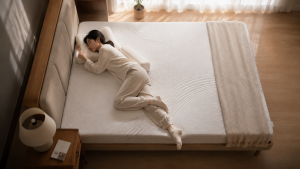
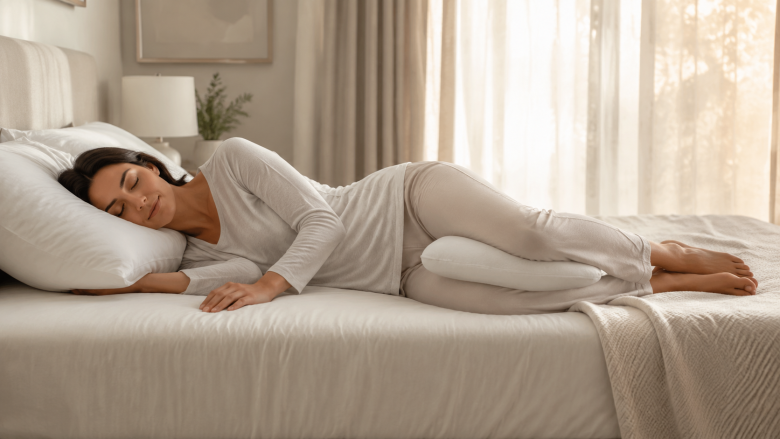
Most people don't realize that the fetal position also restricts breathing. The curled posture compresses the ribcage, reducing lung capacity. If you snore or have sleep apnea, this position can make it worse. The ideal side sleeping position is a "log" position - straightish, with a slight bend in the knees, not a tight curl.
3. Sleeping on Your Back With a High Pillow
Back sleeping is often recommended for spinal alignment, but only if you do it right. A common mistake: using a thick pillow that pushes your head forward. This forces your neck into flexion, which can worsen sleep apnea, cause snoring, and lead to cervicogenic headaches. The back position with a high pillow is actually one of the worst for your neck, because it mimics the same posture as looking down at your phone all day.
Combine that with a soft mattress that lets your hips sink, and you end up with a "banana" shape - your head propped, your lower back arched. This is not alignment. It's a recipe for pain.
What Is an Unhealthy Sleep Position?
An unhealthy sleep position is any position that disrupts the natural curves of your spine or restricts your breathing. Signs that your current position is unhealthy include waking up with a stiff neck, lower back pain, headaches, tingling in your arms or hands, or excessive snoring. If you wake up feeling more tired than when you went to bed, your sleep position might be the culprit.
I've worked with people who thought they were "just bad sleepers," but after changing their position, their sleep quality improved dramatically. The key is to identify the specific stress points your body is experiencing.
The 3:2:1 Rule for Sleeping (And Why It's a Game-Changer)
One of the most practical sleep frameworks I've ever used is the 3:2:1 rule. It's not a position, but it sets the stage for your body to naturally find a good position. Here's how it works:
- 3 hours before bed: Stop eating. A full stomach triggers acid reflux, which can force you to sleep on your left side (the recommended position for reflux) but also disrupts deep sleep. I've seen clients who thought they were just "side sleepers" but were actually trying to avoid heartburn.
- 2 hours before bed: Stop drinking fluids. This reduces nighttime bathroom trips. Frequent waking to urinate, even if you fall back asleep quickly, fragments your sleep cycle. The 3:2:1 rule helps you stay in deeper stages longer.
- 1 hour before bed: No screens. Blue light suppresses melatonin, but more importantly, the mental stimulation from scrolling keeps your brain in an alert state. When you finally lie down, your body might be tired but your brain isn't, making it harder to settle into a comfortable position.
This rule isn't a magic bullet, but it's remarkably effective. I've used it with dozens of clients who complained of waking up groggy. After a week, most reported fewer mid-night awakenings and more energy in the morning. It's a simple, evidence-based change that supports whatever position you choose.
For a deeper dive on how food affects sleep, check out our guide on 7 Best Foods That Promote Restful Sleep - timing matters just as much as what you eat.
The Healthiest Way to Go to Sleep: A Decision Tree
Instead of telling you to be a back sleeper, let's find your best position based on your personal health profile. This is a decision tree I use with my clients. Answer honestly, and you'll get a recommendation that actually fits.
Step 1: Do you snore or have sleep apnea?
If yes, sleep on your side. Back sleeping worsens airway collapse. The best side for sleep apnea is your left side, because it keeps your airway more open and reduces reflux. Use a contoured pillow to support your neck and a body pillow between your knees to keep your hips aligned.
If you snore but don't have diagnosed apnea, still try side sleeping. It's the most common recommendation from sleep specialists for a reason.
Step 2: Do you have chronic lower back pain?
If yes, back sleeping with a pillow under your knees is your best bet. This position flattens your lumbar spine and reduces pressure on the discs. But here's the catch: you need a firm mattress that doesn't let your hips sink. If your mattress is too soft, you'll end up in that banana shape I mentioned earlier. If you hate back sleeping, try side sleeping with a pillow between your knees - that also keeps your pelvis level.
Step 3: Do you have neck pain or shoulder pain?
If you have neck pain, avoid stomach sleeping and back sleeping with a high pillow. The best position is side sleeping with a pillow that fills the gap between your ear and shoulder. Your pillow height should match your shoulder width - if you're broad-shouldered, you need a thicker pillow. If you have shoulder pain, avoid sleeping on the painful side. Instead, sleep on your back or on your opposite side with a pillow supporting your arm.
Step 4: Are you pregnant?
If yes, left side sleeping is the gold standard. It improves blood flow to the placenta and reduces pressure on the liver. Use pillows behind your back and between your knees for comfort. Never sleep on your back in late pregnancy - it can compress the vena cava, reducing blood flow.
Step 5: You refuse to stop stomach sleeping - what now?
If you're a dedicated stomach sleeper, I'm not going to force you to change. But I will show you how to do it with less harm. Use a very thin pillow (or no pillow) under your head to keep your neck neutral. Place a flat pillow under your pelvis to reduce the arch in your lower back. This minimizes the spinal twist. And if you can, try to sleep with your face turned to the side, not flat down - that reduces the neck rotation. It's still not ideal, but it's a safer alternative.
What Position to Not Sleep In (And How to Fix It)
If you're sleeping in any of the three worst positions I described earlier, you need to change. But I know that changing a sleep position is hard - it's a deeply ingrained habit. Here's a practical approach I've used with hundreds of clients:
- Use physical barriers: If you tend to roll onto your stomach, sew a tennis ball into the front of a pajama shirt. It's uncomfortable enough to wake you up when you roll over, and after a few nights, your brain will learn to avoid that position.
- Pillow props: If you tend to curl up too tightly, place a body pillow behind your back and one between your knees. This physically prevents you from curling into a fetal ball.
- Mattress matters: A medium-firm mattress is best for most people. Too soft, and you'll sink into bad alignment. Too firm, and you'll create pressure points. If you're unsure, try a mattress topper - it's a cheap way to experiment.
One client I worked with was a lifelong stomach sleeper with chronic neck pain. I suggested she try side sleeping with a body pillow. She hated it for the first week. But after two weeks, she said her neck pain was gone. She now sleeps on her side almost every night. The key is patience - your body will adapt if you give it a chance.
How to Transition to a Better Sleep Position (Without Losing Sleep)
Most people try to switch positions cold turkey and end up tossing and turning all night. Don't do that. Instead, use a gradual transition. Start by spending the first 30 minutes of sleep in your new position. Then, if you wake up later, go back to your old position. Over a few weeks, slowly increase the time in the new position.
Another trick: use a sleep tracker (like a smartwatch or a simple app) to see how often you change positions. If you find yourself waking up in a bad position, adjust your pillow setup. Sometimes the position isn't the problem - it's the pillow.
If you're struggling with a consistent bedtime routine, our Student Nighttime Routine from Study to Sleep offers a step-by-step framework that works for adults too. It's not just for students - the principles of winding down apply to anyone.
The Role of Pillows, Mattresses, and Sleep Environment
Your sleep position doesn't exist in a vacuum. The right pillow can make a bad position tolerable, and the wrong mattress can ruin even the best position. Here's a quick guide:
- Back sleepers: Use a medium-loft pillow (about 4-5 inches) that supports the natural curve of your neck. A memory foam pillow with a contoured shape works well. Place a small pillow under your knees.
- Side sleepers: Use a high-loft pillow (thicker) to fill the gap between your ear and shoulder. A body pillow or knee pillow helps keep your hips level.
- Stomach sleepers: Use a very thin pillow or no pillow at all. A flat pillow under your pelvis reduces lower back arch.
- Mattress firmness: Medium-firm is the sweet spot for most people. If you weigh over 200 pounds, you may need a firmer mattress to prevent sinking. If you're under 150 pounds, a softer mattress might be better.
Your sleep environment also matters. A cool room (65-68°F), blackout curtains, and white noise can help you stay in a good position longer. If you wake up too hot, you'll toss and turn, undoing any alignment benefits. Our Seasonal Sleep Adjustment Routine for Changes covers how to adapt your bedroom for temperature shifts.
Common Misconceptions About Sleep Positions
There are a few myths I hear all the time. Let me clear them up.
Myth: Sleeping on your back is always best. Not true. If you have sleep apnea, back sleeping can worsen it. If you snore heavily, back sleeping makes it louder. If you have a thick pillow, back sleeping can hurt your neck. The "best" position is the one that works for your specific health issues.
Myth: Side sleeping on your left side is bad for your heart. Actually, left side sleeping is recommended for pregnancy and reflux. It's true that in rare cases, people with heart failure feel more comfortable on their right side, but for most people, left side is perfectly fine. If you have a heart condition, consult your doctor - but don't avoid left side out of fear.
Myth: You can't train yourself to change sleep positions. You absolutely can. It takes consistent effort for about 2-3 weeks, but your brain will adapt. The key is to use physical barriers (pillows, tennis balls) and to be patient. I've seen dozens of people successfully change their sleep position - it's not magic, just persistence.
When to See a Doctor or Sleep Specialist
If you've tried adjusting your sleep position, pillows, and mattress, and you still wake up with pain, fatigue, or headaches, it's time to see a professional. Conditions like sleep apnea, restless legs syndrome, and chronic pain require medical attention. A sleep study can identify issues that no position change can fix.
Similarly, if you have numbness or tingling in your limbs that persists throughout the day, it could be a pinched nerve that needs evaluation. Don't just assume it's your sleep position - get it checked.
For parents dealing with a baby's sleep regression, the Sleep Regression Calculator can help you understand developmental sleep disruptions, but for adults, the same principles of routine and environment apply.
The Bottom Line: Find Your Position, Don't Force One
There is no single best position to sleep in for everyone. Your body is unique, and your sleep position should reflect that. The three worst positions - flat stomach, tight fetal, back with high pillow - are the ones to avoid. But even if you're stuck in one of those, you can transition to a safer version with the right tools and patience.
Use the 3:2:1 rule to set yourself up for success. Use the decision tree to find your best starting point. And if you need a weekend reset, our Weekend Recovery Sleep Plan for Recharging can help you build better habits from scratch.
Stop trying to be a perfect back sleeper. Start being a smart sleeper - one who knows their body, respects their limits, and makes small changes that add up to restful, pain-free nights.