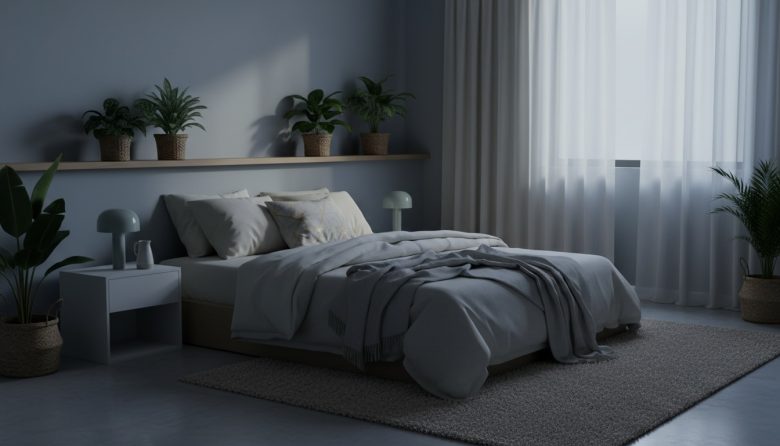
Picture this: It’s 11 p.m., and you’re tossing and turning in a room cluttered with laundry piles, glowing screens, and that one lamp casting harsh light. Your mind races instead of winding down. Sound familiar? This chaos turns your bedroom from a rest haven into a stress zone.
Your bedroom should act as a powerful sleep cue. When you step in, your body gets the signal: time to relax. Small tweaks here build consistency without overhaul.
We’ll use a simple 4-pillar framework: Declutter for mental quiet, Ambiance with colors and lighting, Comfort through bed essentials, and Serenity via temperature and noise control. These steps lead to steady sleep wins. Ready for small changes that stick?
Start with one pillar this week. You’ll notice your evenings feel calmer right away. Let’s build that sleep-friendly space together.
Declutter Your Space to Quiet Your Mind
A cluttered room keeps your brain buzzing. Piles of clothes or papers signal unfinished tasks. Clearing them creates a serene cue for rest.
Grab three bins: keep, donate, trash. Sort one area at a time, like your nightstand or dresser. Aim for 10 minutes nightly to build the habit.
Habit stack this with your evening routine—brush teeth, then declutter. Low friction comes from a “drop zone” basket by the door for incoming items.
Before: Sarah’s room had mail stacks and gym bags everywhere; she lay awake worrying. After two weeks of nightly sorts, her space felt open. She fell asleep 15 minutes faster. Your turn for that calm.
Layer in Soothing Colors and Textures
Cool blues and soft earth tones mimic dusk, signaling bedtime. Harsh reds or bright whites amp up alertness. Swap what you can for calm vibes.
Test paint samples on one wall—peel off if unsure. Choose breathable fabrics like cotton or linen for curtains and throws.
Real-life win: Mike added a navy throw blanket over his bed. No full repaint needed. His wind-down felt natural after a few nights.
Sustainable tip: Layer textures gradually. Start with pillow shams in soft gray. Consistency builds as your eyes adjust to the peace.
For more on pairing this with daily tips for natural better sleep habits, notice how ambiance sets the tone.
Set Up Gentle Lighting Cues for Wind-Down
Overhead lights jolt your system like daytime. Switch to dimmable lamps with warm bulbs around 2700K. They ease you into sleep mode.
Habit stack: Set a phone timer for 8 p.m. to dim lights. Pair with herbal tea for a routine cue.
Example shift: Lisa used to scroll under bright bulbs till midnight. Now, her salt lamp glows softly by 9 p.m. She drifts off easier, no blue light fight.
Keep bulbs accessible—no fumbling in the dark. This friction reducer makes consistency simple. Your evenings transform steadily.
Bed Comfort Essentials: Do’s and Don’ts Table
Your bed is the star—get it right for supportive rest. Use this table as a quick checklist. It covers key swaps for better sleep alignment.
| Do | Don’t | Why It Helps Sleep |
|---|---|---|
| Choose medium-firm mattress support | Sink into a too-soft or sagging one | Keeps spine aligned, reduces toss-turns |
| Opt for low-loft pillows (4-6 inches) | Stack multiple high pillows | Supports neck without strain for deeper rest |
| Pick breathable cotton or bamboo sheets | Use synthetic or heavy flannel | Regulates temp, prevents night sweats |
| Add a mattress topper if needed | Ignore worn-out bedding | Customizes comfort, boosts satisfaction |
| Layer lightweight blankets | Over-bundle with heavy comforters | Allows easy adjustments for ideal warmth |
Pick one “Do” from the table weekly. Tie it to your evening cue, like fluffing pillows post-declutter.
Example: Tom swapped synthetic sheets for cotton. His “hot flashes” at 2 a.m. vanished. Consistency here means sustainable comfort gains.
Tune Temperature and Air for Effortless Drift-Off
Aim for 60-67°F—your body’s natural sleep drop. Crack a window or use a fan for circulation. Stuffy air fights relaxation.
Choose breathable linens from the table above. A bedside hygrometer tracks humidity simply.
Small win: Emma set her thermostat to 65°F and added a ceiling fan. Her drift-off time halved. Steady tweaks like this add up.
Habit cue: Check temp during wind-down lights. Low effort, big rest payoff.
Mute Noise and Screens for Deeper Rest
Traffic hum or partner snores disrupt cycles. White noise machines mask sounds gently. Blackout curtains block streetlights.
Move charging stations outside—friction ends late-night scrolls. Earplugs or apps work too.
Reducer tip: Designate bedroom for sleep only. Read or worry elsewhere. This cues your brain consistently.
For tracking patterns amid changes, consider how to track sleep patterns with simple notes to spot wins.
Common Blockers and Practical Fixes
Blocker one: Tiny apartment space. Fix: Vertical storage like under-bed bins keeps floors clear. Cue it after laundry day.
Blocker two: Tight budget. Start with thrift-store sheets or DIY blackout liners from old towels. Small spends build progress.
Blocker three: Partner habits, like late TV. Compromise with a shared dim lamp and noise machine. Discuss during calm daytime.
Blocker four: Shift work chaos. Adapt with portable fans or masks. See a flexible sleep plan for shift workers everywhere for cues.
Tiny metric: Rate your “bed-ready score” 1-10 nightly—clutter, comfort, calm. Track for 7 days. Watch steady improvements.
Pick one “Do” from the table and one evening cue, like dimming lights. Try for 7 days. Celebrate small wins—you’re building lasting rest.
Frequently Asked Questions
Can I make these changes on a tight budget?
Yes, focus on low-cost swaps first. Thrift breathable sheets or use thumbtacks for blackout fabric from dollar stores. Fans cost under $20 and transform air flow. Progress comes from consistent small buys, not big spends.
What if I share my bedroom and my partner resists?
Talk benefits together—better rest for both. Start with shared wins like a white noise machine. Compromise on lighting with clip-on lamps. Involve them in picking one “Do” for buy-in.
How soon will I notice better sleep?
Many feel calmer evenings in 3-5 days. Deeper rest builds over 2 weeks with consistency. Track your tiny metric to see personal shifts—no rush, just steady gains.
I’m a renter—any no-permanent-change ideas?
Opt for removable tweaks: Command hooks for curtains, peel-and-stick samples, or tension rods. Mattress toppers slip on easily. All reverse without damage, keeping your deposit safe.
How do I keep the setup consistent long-term?
Anchor with routines—declutter cues nightly. Weekly refresh checks reset drifts. Habit stack with brushing teeth. Your space stays serene as cues automate it.