Why a List of Hobbies Won't Fix Your Screen Habit
If you've ever closed a tab full of "100 screen-free activities" and felt more overwhelmed than inspired, you're not alone. I've been there. When I first tried to go screen-free in the evenings, I made the classic mistake: I printed out a list of 30 ideas, stuck it on the fridge, and then spent half an hour staring at it, trying to decide. That's decision fatigue, and it's the enemy of behavior change.
The real problem isn't a lack of things to do without screens. It's that our brains and environments are wired for passive consumption. The remote control lives on the armrest. The phone charger is right next to the bed. The couch is pointed at the TV. You're fighting the gravitational pull of ergonomics.
This article is not another list. It's a system - a repeatable, low-friction way to transition from a screen-filled day to an analog evening. I'll share what I learned after months of trial and error, including the specific mistakes I made (like trying to do a "productive" hobby when I was too tired to hold a knitting needle) and the hacks that actually stuck.
If you're reading this, you probably already know that screens disrupt sleep, strain your eyes, and steal time from real connection. But knowing isn't doing. The system below is designed to close that gap.
The 5-Minute Transition Ritual: Put Your Phone to Bed
The hardest part of a screen-free evening isn't the next two hours - it's the first five minutes. Your brain is still in dopamine-scanning mode from the last email or social scroll. You need a physical and psychological bridge to cross into analog time.
I call this the "Phone Bedtime" ritual. It takes exactly five minutes and has three non-negotiable steps:
- Step 1: Charge your phone outside the bedroom. Not on the nightstand, not on the dresser. In a different room - ideally a kitchen drawer or a hallway closet. I use a dedicated charging station in the living room, far from where I'll sleep. This single change eliminated 90% of my evening phone-checking.
- Step 2: Light a candle or turn on a low-light lamp. This is a sensory cue. The flicker tells your brain: "We're in a different mode now." I use a beeswax candle with a cedar scent because it's calming and doesn't trigger any "productivity" associations. Choose one that feels like wind-down, not work.
- Step 3: Do a single physical action that signals the end of screen time. For me, it's putting my AirPods in their case and zipping it shut. The sound of the zipper becomes a conditioned response. For a friend, it's turning off the Wi-Fi router. For you, it could be closing the laptop lid all the way. The key is consistency - the same action, every night.
Most people don't realize that the transition itself is the skill, not the activity. If you skip the transition, you'll end up on your phone within 15 minutes anyway, because your brain hasn't shifted gears. I learned this the hard way: I once tried to go straight from a work Zoom to a board game, and I spent the first 20 minutes of the game with my hand reaching for my pocket.
For a deeper dive on how to wire this into your whole family's routine, see our guide to a family evening sleep routine.
The Choose-Your-Own-Energy Menu: Low, Medium, and High Effort
Here's the thing nobody tells you about screen-free evenings: some nights you have zero energy. You've spent all day in meetings, making decisions, and being "on." The last thing you want is a "productive" hobby like journaling or learning the ukulele. You need something that feels like a hug, not a chore.
That's why a simple list of ideas fails. It assumes you'll be in the same energy state every single night. You won't. So instead of one list, I created a menu with three tiers: low energy (barely awake), medium energy (some gas left), and high energy (ready to engage).
Low Energy (0-2 out of 10)
These are for nights when you're physically and mentally depleted. No thinking required. No fine motor skills needed.
- Listen to a podcast or audiobook. This counts as screen-free if you're not looking at the device. I use a bluetooth speaker and queue up a narrative podcast before I put my phone away. Set it to a 20-minute sleep timer so you don't have to turn it off.
- Stare at a fire or a candle. Not kidding. There's a reason fires are hypnotic. It's a form of passive visual stimulation that doesn't require attention. If you don't have a fireplace, a candle works. I sometimes pair it with a cup of herbal tea and just... sit.
- Flipping through a coffee table book. Photography books, art books, or even a cookbook. The key is something visual but not linear. You can flip pages randomly, land on a picture, and let your mind wander.
- Gentle stretching or foam rolling. No routine, no goal. Just five minutes of moving your body slowly. I keep a foam roller next to the couch so I can reach for it without standing up.
Medium Energy (3-6 out of 10)
You have a little bandwidth left. You can hold a conversation or follow a simple set of steps.
- Puzzles. Jigsaw puzzles, crosswords, sudoku (on paper). I keep a puzzle on a side table in the living room. I can do a few pieces during a conversation or an ad break (if you're not fully screen-free yet).
- Board games for two (or solo). Games like Patchwork, Hive, or Azul are tactile, quick, and don't require a long setup. For solo play, I love Sprawlopolis - a card game that fits in a wallet.
- Drawing or coloring without a goal. I keep a sketchbook and a set of 10 pens in a basket by the sofa. No pressure to make something good. Just patterns, shading, or doodles.
- Baking something simple. Not a three-layer cake. A mug cake, a batch of cookies you can freeze, or even just making toast from scratch. The process itself is calming.
High Energy (7-10 out of 10)
You're rested, curious, and ready to engage deeply. These activities are the most rewarding but also the most demanding.
- Learning a tactile skill. Knitting, whittling, calligraphy, lock picking. Pick something that requires hand-eye coordination and gives you a tangible result. I started learning to whittle during a high-energy phase and now I have a small collection of wooden spoons.
- Playing a musical instrument. If you already play, great. If not, try a kalimba (thumb piano) - it's intuitive and sounds beautiful even in the hands of a beginner.
- Hosting a screen-free game night. Invite a friend over for a specific game (like Codenames or Ticket to Ride). The social accountability keeps you engaged.
- Working on a long-term project. A jigsaw puzzle with 1000 pieces, a miniature model, a leather journal you're binding. These are the activities that make you lose track of time in the best way.
To make this menu work, prep your supplies ahead of time. The basket next to my couch always has the current puzzle, a sketchbook, pens, a deck of cards, and a small candle. If I have to go searching for supplies, I'll default to the phone. This is a classic environment hack: reduce friction for the desired behavior and increase friction for the undesired one.
Environment Hacks: Make the Screen-Free Option the Easy Option
Willpower is a finite resource. You don't want to rely on it every night. Instead, design your environment so that the screen-free activity is the path of least resistance.
Here are the specific changes I made that had the biggest impact:
- Hide the remote. Put it in a drawer, not on the armrest. If you have to open a drawer, you have a moment to pause and ask: "Do I actually want to watch TV, or am I just doing it out of habit?"
- Unplug the TV when not in use. This is extreme, but effective. If you have to plug it in and wait for it to boot, you'll be more intentional.
- Create a "reading corner" with a dedicated lamp. A warm, adjustable light makes reading feel like a treat. I use a clip-on book light that I can angle to avoid glare.
- Keep a project basket within arm's reach of your main seating area. Mine is a medium-sized wooden crate. It holds: a small puzzle, a deck of cards, a whittling knife with a block of basswood, and a notebook. I rotate the contents once a week.
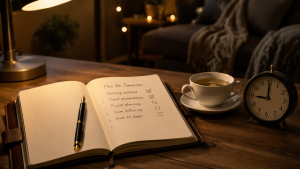
- Remove phone chargers from the bedroom entirely. If you need an alarm, buy a standalone alarm clock. I use a cheap analog clock from a thrift store. It's silent and doesn't emit blue light.
One thing that surprised me: the physical act of plugging in my phone in the kitchen drawer and walking away felt rebellious at first. That's a sign that you're breaking a strong habit. After a week, it felt normal. After a month, I felt a sense of relief every time I closed the drawer.
For more on how to set up your space for a relaxed evening, see our guide on building a quick evening relaxation habit. The environment principles overlap heavily.
How to Invite Others Without Making It Weird
If you live with a partner, roommate, or family, going screen-free can feel like you're imposing a rule. The key is to frame it as an invitation, not a restriction. Instead of saying "We're not watching TV tonight," say "I'm going to work on the puzzle for a bit - would you like to join me?"
Here's what I've found works well:
- Start with a shared activity they already like. If your partner enjoys cooking, suggest making a simple meal together. If your kid loves building with blocks, sit on the floor and start building. People are more likely to join a positive behavior than to stop a negative one.
- Use the 10-minute rule. Propose "Let's do 10 minutes of this screen-free activity, and if either of us wants to stop, we can." This lowers the commitment threshold. Most of the time, after 10 minutes, you'll both want to continue.
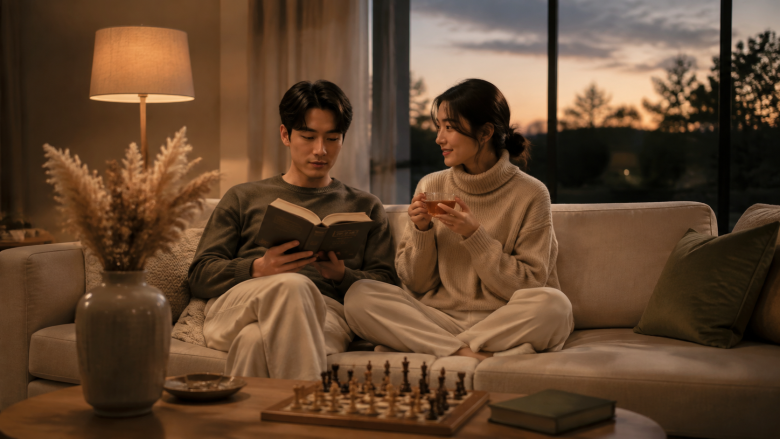
- Create a "date night" substitute. My partner and I started a weekly "analog date" night where we play board games, make a fancy dessert, and listen to a vinyl record. It's now something we look forward to, not a chore.
- Be honest about your own struggles. If you're trying to reduce screen time, say: "I've been feeling really distracted by my phone, and I want to try being more present in the evenings. Would you help me stick with it?"
One common trade-off: if your partner is not on board, you may feel like you're doing it alone. That's okay. You can still do your own screen-free activity while they watch TV. Use headphones for anything you listen to, and position yourself so you're not facing the TV. The goal is not to control their behavior, but to model yours.
What to Do in the Evening Without Screens (Real Answers to Common Questions)
I've heard these questions so many times from friends and readers. Here's the honest, experience-based answers - not the generic advice.
What to do in the evening without screens? The best answer depends on your energy level, as I outlined above. But if you're completely stuck, start with the lowest-effort option: sit outside for 5 minutes and look at the sky. No phone, no book, no music. Just the sky. That's a complete screen-free activity. You don't need to be productive.
What are some ideas for a screen-free evening? Beyond the obvious (reading, puzzles, board games), consider activities that engage your hands: folding laundry while listening to a podcast (if you can safely set the audio up ahead of time), meal prepping for the next day, or writing a letter by hand. The key is to choose something that feels like a reward, not a punishment.
What to do in the evening instead of TV? Try a "slow hobby" like whittling, embroidery, or model building. These activities have a natural rhythm that fills the same slot as a TV show - they're absorbing, but they don't overstimulate. I've replaced my evening Netflix habit with a 20-minute session of whittling, and I find it even more relaxing because I have something physical to show for it.
What to do for fun without screens? Fun is subjective, but I've found that the most consistently enjoyable screen-free evenings involve social connection or creative flow. Invite a friend over for a game night, or try a collaborative project like a co-op puzzle. If you're alone, challenge yourself to learn a new skill - the first 15 minutes of frustration is worth the payoff of a new competence.
Why You Shouldn't Try to Be Productive Every Night
This was the biggest mindset shift for me. When I first started going screen-free, I filled my evenings with "useful" activities: reading dense non-fiction, practicing a language, doing yoga. I quickly burned out. I was treating screen-free time as another task to optimize.
Here's the truth: rest is the whole point. Your brain needs unstructured, low-stimulation time to process the day. That's why low-energy activities like staring at a candle or flipping through a magazine are not a waste - they're essential. The most effective screen-free evening routine is one that leaves you feeling refreshed, not accomplished.
I now aim for a mix: two nights a week of medium/high energy (learning, creating), and the rest of the nights low energy (rest, gentle connection). The balance keeps the routine sustainable.
If you're someone who exercises in the evening, you might benefit from the post-workout evening plan we created, which combines physical recovery with screen-free wind-down.
Common Pitfalls and How to Navigate Them
No system works perfectly every time. Here are the most common obstacles I've encountered - and how I handle them:
- "I'm too tired to do anything." Then do nothing. Literally. Lie on the floor, close your eyes, and do nothing. That's a valid screen-free activity. The only rule is no phone.
- "I don't know what to do with my hands." This is a real sensation after a lifetime of scrolling. I keep a smooth stone or a fidget toy in my pocket. Just holding something can calm the restlessness.
- "My partner wants to watch TV and I don't." Wear headphones if you're listening to something in the same room, or move to a different room. Respect their choice while protecting your own.
- "I start a hobby but lose interest after 10 minutes." That's fine. You're allowed to switch. The goal is not to finish a project, it's to be present. I've started and abandoned three different knitting projects. The point was the time I spent, not the product.
- "I feel lonely without my phone." This feeling fades after a week or two. In the meantime, call a friend or family member on an actual phone. Voice calls are screen-free if you're not looking at the device. Or write a letter.
For a structured approach to winding down that addresses these issues, check out our simple evening routine for deeper sleep. It's a great complement to the system I've described here.
The Social Accountability Loop: Make It Stick
One of the most powerful tools for behavior change is social accountability. If you tell a friend that you'll text them after you complete a screen-free evening, you're much more likely to follow through. I have a "screen-free pact" with a friend who lives in a different city. We text each other a photo of our phone in a drawer or a candle lit, then we're free to do our own activities. We check in the next morning.
You can also join or create a local screen-free club. I know a group that meets weekly at a library to play board games and chat. No phones allowed. The simple act of showing up creates a norm.
If you have kids, the approach is similar. Use the screen-free evening tips for easy bedtime to create a family-wide ritual. When everyone is on board, the transition becomes a shared experience rather than a battle.
Your First Night: A Step-by-Step Plan
To make this actionable, here's exactly what you should do this evening:
- Set a stop time for screens. Decide now - 8:00 PM, 8:30 PM, whatever works. Write it down.
- Five minutes before that time, start the transition ritual. Move your phone to its designated spot, light a candle, and do your closing action.
- Check your energy level. Are you low, medium, or high? Pick one activity from the corresponding tier. Do not try to do more than one.
- Set a timer for 20 minutes. If you want to continue after 20 minutes, great. If not, you can stop. The goal is to build a habit, not a marathon.
- After the activity, do nothing for 5 minutes. Lie down, breathe, or stare out the window. This is the "digestion" period for your nervous system.
That's it. One small, repeatable system. Over time, you'll find that the screen-free hours become the part of your day you look forward to most - not because you're doing something cool, but because you're finally giving your brain the quiet it's been craving.