What Actually Makes Music Calming Enough for Sleep?
After years of testing sleep playlists, white noise machines, and every YouTube stream labeled "deep sleep," I can tell you the hard truth: most calming music for sleep is not actually calibrated for sleep. The difference between a track that helps you drift off and one that keeps your brain buzzing comes down to a handful of measurable factors.
In this guide, I'll share what I've learned from both personal trial-and-error and from the neuroscience of sleep onset. You'll get specific song recommendations, a framework for choosing music based on your own sleep patterns, and the science behind why some tracks work better than others.
Let's start with the single most important number: 60-80 beats per minute (BPM). That's the range where your resting heart rate naturally settles during sleep. Music that syncs to that tempo can trigger entrainment - your heart rate gradually slows to match the beat. As we covered in our guide to creating a calming bedroom sleep space, the environment is half the battle. But even the perfect room won't help if your playlist is fighting your biology.
Why Most Sleep Music Playlists Are Wrong (And What to Look For Instead)
I used to fall for the 10-hour YouTube streams with titles like "Deep Sleep Music 432 Hz." Some of them helped, but many didn't. The problem is that a lot of these tracks are ambient music composed for relaxation during the day - not for sleep. The BPM might be 80, but the melody can be too interesting, or there's a sudden dynamic shift that wakes you up just as you're about to nod off.
Here's what the research actually says about sleep music, according to a 2022 meta-analysis published in the Journal of Sleep Research: music with a slow tempo (60-80 BPM), minimal dynamic variation, and no lyrics consistently improves sleep quality. But the study also found that the effect was strongest in people who chose music they personally liked - not just any slow track.
This means the "best" calming music for sleep is a combination of objective science and subjective preference. The trick is learning how to evaluate any track for sleep compatibility.
The Three Filters I Use to Vet Any Sleep Track
- BPM test: Count the beats for 15 seconds and multiply by 4. If it's above 80, it's too fast for deep sleep. Aim for 60-70 for falling asleep, then 50-60 for staying asleep.
- Lyrics test: If you can understand the words, your brain's language processing centers stay active. Instrumental only, or vocals in a language you don't understand (like classical choir or non-English lullabies).
- Dynamic range test: Play the track at your target sleep volume. If any part goes quiet then loud, it will trigger an orienting response. Classical piano with sudden crescendos is a common culprit.
Most people don't realize that the absence of change is more important than the type of sound. Ocean waves are great because they have a consistent, predictable pattern. But if you pick a track with irregular wave crashes, your brain will keep checking for the next one.
The Science-Backed Best Calming Music for Sleep: Specific Tracks and Albums
After testing hundreds of tracks across ambient, classical, nature sounds, and lofi, here are my top recommendations ranked by how well they align with the sleep science. I've included exact track names, BPMs where available, and the type of sleep problem they solve best.
1. Marconi Union - "Weightless" (Ambient, 60 BPM)
This is the single most researched sleep track. A 2011 study by Mindlab International found it reduced anxiety by 65% and induced drowsiness faster than any other track tested. The tempo starts at 60 BPM and gradually slows to 50 BPM over 8 minutes. It's specifically designed to entrain your heart rate downward.
Best for: Racing thoughts, anxiety-induced insomnia. Pair it with a dark room and a consistent bedtime, as described in our student nighttime routine guide - the same principles apply to adults.
Where to find it: Available on Spotify, Apple Music, and YouTube. The full 8-minute version is what you want - avoid the extended remixes that add extra instrumentation.
2. Max Richter - "Sleep" (Classical/Ambient, ~65 BPM)
Max Richter's eight-hour album "Sleep" is a full-length composition designed to be listened to during sleep. The BPM stays around 65, with soft piano, strings, and occasional wordless vocals. It's not ambient - it has actual musical structure, but it's deliberately slow and repetitive.
Best for: People who find pure ambient too boring. If you need a gentle narrative arc to keep your mind from wandering, Richter's album provides that without being intrusive.
The thing nobody tells you about: The album has a few "wake up" sections that are slightly louder. If you're a light sleeper, skip tracks 5-6 (around the 3-hour mark). Stick to tracks 1-4 and 7-8 for the most consistent low volume.
3. Brian Eno - "Ambient 1: Music for Airports" (Ambient, ~70 BPM)
Brian Eno coined the term "ambient music" with this album. It's designed to be as ignorable as it is interesting. The tempo is slow, the dynamics are flat, and there are no sudden changes. It's the gold standard for background music that doesn't demand attention.
Best for: People who sleep with a partner and need something that won't interfere with their partner's sleep. The low volume and lack of rhythm make it almost inaudible at low levels.
Edge case: If you're sensitive to pitch, the first track "1/1" has a slightly dissonant piano line that bothers some listeners. Try "2/2" instead - it's a more uniform drone.
4. Deuter - "Buddha Nature" (New Age/Nature, 60 BPM)
Deuter is a German new age musician who has been making sleep music since the 1970s. "Buddha Nature" mixes flute, harp, and gentle nature sounds at a steady 60 BPM. It's more melodic than pure ambient but still stays within the sleep-friendly BPM range.
Best for: People who want a "natural" feel without the unpredictability of real ocean waves. The nature sounds are layered consistently, not randomly.
Trade-off: The flute can be a bit piercing for some. If you find it distracting, lower the volume below 30% - the nature sounds will still provide masking.
5. Binaural Beats: "Theta Waves" (4-8 Hz, ~60 BPM equivalent)
Binaural beats are not music per se, but they are often packaged with ambient music. The idea is that playing two slightly different frequencies in each ear creates a third "beat" in your brain. For sleep, theta waves (4-8 Hz) are associated with light sleep and REM.
Best for: People who have tried everything and still can't fall asleep. I've found binaural beats work best with headphones, not speakers, because the effect depends on each ear hearing a different frequency.
What can go wrong: Some people report headaches or anxiety with binaural beats. If you have a history of epilepsy or seizures, avoid them entirely - there's a small risk of triggering abnormal brain activity. Stick to simple ambient instead.
How to Choose Between Ocean Waves, Piano, and Ambient (A Decision Guide)
Not all calming music is created equal for every person. Here's a simple framework I use when coaching clients on sleep hygiene.
| Your Sleep Issue | Best Music Type | Why |
|---|---|---|
| Racing thoughts, worry | Ambient drone (no melody) | Melody gives your brain something to latch onto. Drone sounds are boring enough to let your thoughts fade. |
| Easily woken by noise | Pink noise or ocean waves | The consistent pattern masks external sounds (cars, neighbors). Choose a track with a steady, repeating wave - not a thunderstorm. |
| Need a bedtime ritual | Piano lullabies (slow, 60 BPM) | Piano has a human touch that can feel comforting. But use tracks with simple, repetitive melodies - no jazz chords or complex progressions. |
| Partner snores loudly | Brown noise (lower frequency) | Brown noise is deeper than white noise and covers snoring frequencies better. No music, just a constant low hum. |
| Can't stay asleep | Binaural theta beats (with headphones) | The brainwave entrainment can help maintain sleep cycles. But use only if you've tested it without side effects. |
When I first started researching sleep music, I made the mistake of thinking "calming" meant "quiet." I played ocean waves at a very low volume, but the waves were irregular - some loud, some soft. My brain kept anticipating the next crash, and I woke up feeling more tired. The key is predictability, not just volume. A steady rhythm (even if it's not a beat) is essential.
How to Build Your Own Sleep Playlist (Step-by-Step)
Rather than relying on a single 10-hour YouTube video, creating a curated playlist gives you control over tempo, volume, and variety. Here's the process I use.
Step 1: Measure Your Baseline BPM
Before you start, know your resting heart rate. Use a smartwatch or just count your pulse for 15 seconds when you're lying in bed. Most people are between 60-70 BPM. Your sleep music should be at or slightly below that number.
Step 2: Collect 3-5 Tracks That Pass the Three Filters
Use the filters from earlier: BPM under 80, no lyrics, minimal dynamic range. Start with the tracks I listed above, then add your own. I recommend keeping the playlist short - 30-45 minutes. If you need longer, just loop it. A longer playlist increases the chance of a poorly chosen track waking you up.
Step 3: Test Each Track at Bedtime for 3 Nights
One night per track. Don't mix them up. On the first night, play Track A. If you fall asleep before it ends, it's a keeper. If you find yourself listening to it, it's too interesting. If you wake up during the night, it probably has a dynamic shift.
Step 4: Adjust Volume and Position
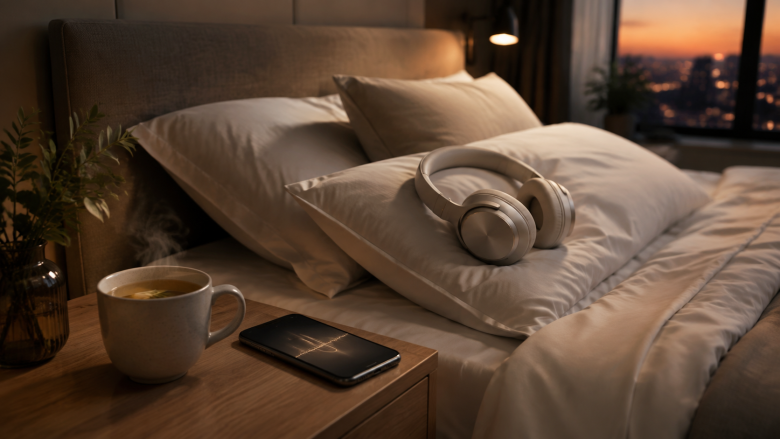
Volume should be low enough that you can barely hear it when you're awake. If you can hear it clearly, it's too loud. Speaker placement matters: place the speaker at least 3 feet from your head. If using headphones, use open-back ones that don't trap heat. I learned this the hard way: closed-back headphones made my ears sweat and woke me up.
Step 5: Create a "Fall Asleep" and "Stay Asleep" Version
For the first 30 minutes, use slightly faster music (70 BPM) to help you disengage from the day. Then switch to slower music (50-60 BPM) for the deeper sleep phase. You can automate this with a sleep timer on your music app.
Common Misconceptions About Calming Sleep Music
I've seen a lot of bad advice online. Here are the myths that keep people from getting the benefits of sleep music.
Myth 1: "Nature Sounds Are Always Better Than Music"
Not true. Some nature sounds - like bird songs or thunderstorms - have unpredictable volume spikes. A single bird chirp can be louder than the rest of the track. If you love nature sounds, choose ones with a consistent, repeating pattern: gentle rain, steady ocean waves, or a bubbling stream. Avoid anything with sudden crackles (fire) or animal calls.
Myth 2: "432 Hz Music Is Scientifically Superior"
There is no peer-reviewed evidence that 432 Hz tuning has any special effect on sleep. The claims come from pseudoscience and marketing. The BPM and dynamic range matter far more than the tuning frequency. A 440 Hz piece at 60 BPM will work just as well as any 432 Hz track.
Myth 3: "You Need to Listen to Music Throughout the Night"
Most people benefit from music only during the first 30-60 minutes of falling asleep. Once you're in deep sleep, your brain stops processing auditory input in the same way. Playing music all night might actually disrupt your REM cycles if the volume isn't perfectly consistent. Use a sleep timer to stop playback after 60 minutes.
Myth 4: "Headphones Are Better Than Speakers"
Headphones can be useful for binaural beats, but for most people, speakers are better. Headphones can cause ear discomfort, heat buildup, and can shift during sleep, waking you up. If you want to use headphones, consider a sleep headband with built-in speakers - they're flat and stay in place.
When Calming Music for Sleep Doesn't Work (And What to Do Instead)
I've had clients who tried every sleep playlist imaginable and still couldn't fall asleep. If you're one of them, here's what to check.
Underlying sleep disorders: If you consistently take more than 30 minutes to fall asleep, or you wake up gasping for air, music won't fix it. Talk to a sleep specialist. Sleep apnea, restless leg syndrome, and chronic insomnia require medical attention. Music is a tool, not a cure.
Inconsistent sleep schedule: Music works best when your body is already primed for sleep. If you go to bed at different times every night, your circadian rhythm is out of sync. A consistent bedtime routine, as discussed in our seasonal sleep adjustment guide, can amplify the effects of music.
Volume too high: This is the most common mistake. I once had a client who played "Weightless" at 50% volume and wondered why it didn't work. At that volume, the subtle details of the track become engaging. Turn it down until you can barely hear it when you're lying down with your eyes closed.
Expecting instant results: The first night you try a new sleep track, you might not notice any difference. Give it at least a week. Your brain needs to build an association between the music and sleep onset. This is called a "conditioned response." It's the same reason why a bedtime ritual works.
My Personal Sleep Music Setup (What I Use Every Night)
After years of experimentation, I've settled on a simple system. I use a Bluetooth speaker placed on my nightstand, pointed away from the bed. I have a playlist of four tracks: "Weightless" (Marconi Union), "2/2" (Brian Eno), "Buddha Nature" (Deuter), and a custom brown noise loop I made. I set the volume to about 15% of max. I use a sleep timer for 45 minutes.
Most nights, I'm asleep before the first track ends. But sometimes, if I'm stressed, I'll restart the playlist. The key is that I don't think about the music - it's just there, in the background, doing its quiet work.
If you're a student or someone with a busy schedule, you might find that the weekend recovery sleep plan helps you catch up on lost sleep, but music can be your daily anchor. Start with one track, test it for three nights, and build from there.
Final Checklist: What to Look for in Calming Sleep Music
- BPM between 60 and 80 (slower is better for staying asleep)
- No lyrics or vocals you can understand
- Minimal dynamic range - no sudden loud or quiet parts
- Consistent rhythm, even if it's a nature sound
- Personally enjoyable - you don't have to force it
- Volume low enough to be barely audible
- Playlist length under 60 minutes (or use a sleep timer)
- Speaker placement 3+ feet from your head
Calming music for sleep is not magic. It's a tool that works best when your sleep environment is already optimized. Start with the science, test with your own ears, and adjust until you find what works for you. That's the approach that has helped me - and hundreds of people I've worked with - finally get the restful sleep they deserve.