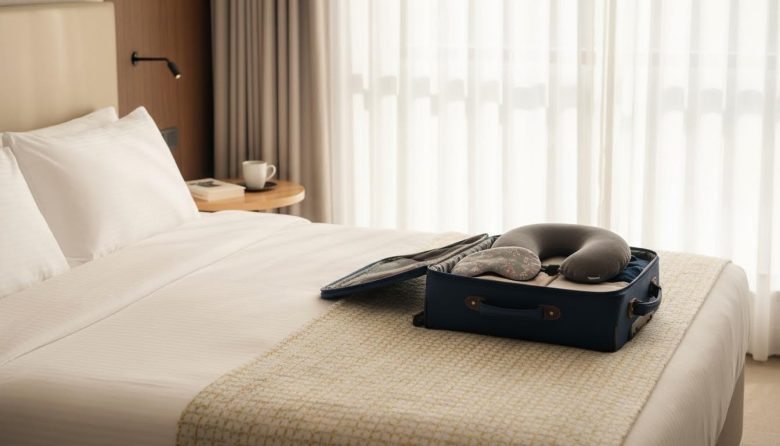
Picture this: You’re on a business trip to Tokyo, staring at your laptop screen at 3 a.m. local time, eyes burning, brain foggy. That red-eye flight wrecked you, and now meetings blur together. Jet lag hits hard because it disrupts your circadian rhythm—the body’s internal clock that syncs with light, meals, and movement.
Your body thinks it’s bedtime while the sun rises. This mismatch drags on recovery. But here’s the good news: a portable sleep routine built on small habits can cut recovery time in half.
We’ll cover four simple pillars, a handy checklist table, common blockers with fixes, and one tiny metric to track. These steps use consistency and cues for steady wins. No extreme measures—just sustainable tweaks for real travel life.
Take Sarah, a weekend warrior who used to crash after flights. She started nudging her bedtime a few days early. Her last vacation? Energized hikes instead of hotel hibernation. You can do this too. Small changes add up on every trip.
Jet lag shortens trips and zaps joy. This routine travels light in your carry-on. Ready to reclaim your adventures?
Shift Your Schedule a Few Days Before Wheels Up
Start adjusting before you pack. For eastward travel, nudge bedtime one hour earlier each day for three days. Westward? Shift later by an hour.
Habit stack this with your evening routine. Brush teeth, then dim lights for your new target time. Use light exposure as a cue—morning walks for early shifts, evening sunglasses for late ones.
Here’s a simple three-day plan:
- Day 1: Adjust by one hour. Pair with dinner—eat at new local time.
- Day 2: Add another hour. Morning light cue: Step outside post-alarm.
- Day 3: Lock it in. Evening wind-down starts 90 minutes before bed.
Mark, a frequent flyer, tried this for Europe. No more 48-hour fog. His secret? Phone reminders as cues. Steady shifts build resilience without friction.
This pre-trip nudge sets your clock ahead. It eases the big jump. Next, pack tools that make it stick.
Pack Light but Smart: Your Portable Sleep Kit
Don’t overpack—focus on low-friction essentials. These create sleep cues anywhere. Chaos turns to calm with the right kit.
Before: Rummaging for plugs in a noisy hotel. After: Eye mask on, cue activated, drifting off fast. Here’s your list:
- Earplugs or noise-canceling buds: Block plane roar or street hum.
- Eye mask: Total blackout for midday naps.
- Melatonin gummies (low-dose): Gentle reset, timed to new zone.
- Blue-light blockers: Screen time without clock disruption.
- Travel pillow: Neck support for upright rest.
- White noise app (offline): Steady hum drowns chaos.
- Protein snacks: Steady energy, no sugar crashes.
These reduce environmental friction. Pack in a clear pouch for easy cues. One traveler swapped junk for this kit—slept through turbulence.
Your kit reinforces habits. It bridges home to away. Now, layer in the core framework.
The 4 Pillars of a Jet Lag-Fighting Travel Routine
These four pillars form your framework. They’re portable and stackable. Use cues like alarms or meals to trigger each.
Pillar 1: Time Your Light. Light resets your clock fastest. Mornings: Seek bright natural light. Evenings: Dim and block blue light.
Stack with coffee—blackout shades first. Example: On arrival, skip sunglasses till dusk.
Pillar 2: Sync Meals to New Time Zone. Food signals your body clock. Eat breakfast at local dawn, dinner by 7 p.m. new time.
Habit stack: Protein-first meals curb hunger cues. A Europe tripper aligned lunches—energy soared by day two.
Pillar 3: Move with Purpose. Gentle motion fights fatigue. Short walks post-meals sync rhythm.
Cue it with hotel stairs. No gym needed—10 minutes builds momentum.
Pillar 4: Wind Down Consistently. Same sequence every night: Dim lights, stretch, read. Consider a gentle pre-sleep yoga routine to relax fully for deeper calm.
Stack on pillow—your kit’s cue. One stacker combined all four on a London layover. Flew home sharp, not shattered.
Pillars flex for any trip. Use the checklist below to apply them daily. It turns theory into routine.
Travel Sleep Habit Checklist
This table maps habits across trip phases. Print or screenshot it. Check off for consistency wins.
| Habit | Pre-Flight Cue | In-Flight Action | Arrival Tweak |
|---|---|---|---|
| Light Management | Morning coffee blackout | Window shade down | Seek natural dawn light |
| Hydration | Water bottle by suitcase | Sip every hour | Electrolyte packet in breakfast |
| Meal Sync | Pack new-zone snack | Protein bar at takeoff time | Local breakfast ASAP |
| Movement | Evening walk prep | Seat stretches hourly | 10-min arrival stroll |
| Wind Down | Kit pouch out | Mask + noise on | 90-min routine pre-bed |
| Melatonin Timing | Calculate dose time | Hold till descent | First night new zone |
| Screen Limits | Blockers charged | 2-hour cutoff | Evening reading swap |
Glance daily—small checks build big recovery. Tweak as needed. It keeps pillars friction-free.
Bust Through Common Travel Sleep Blockers
Blockers sneak up, but fixes are simple. Spot them early for steady progress.
Blocker: Hotel AC hum or traffic. Fix: White noise app at low volume. One traveler layered it with earplugs—nights transformed.
Blocker: Tempting late dinners. Fix: Protein snack swap two hours early. Cues like room service cutoff help.
Blocker: Dry plane air dehydration. Fix: Pre-hydrate, nasal spray onboard. Energy holds without crashes.
Blocker: Jet-lagged hunger pangs. Fix: Scheduled nuts or cheese. Aligns meals without force.
Blocker: Overpacked schedule. Fix: Buffer first day for rest. Small wins compound.
These tweaks turn “impossible” into routine. Stories abound of one fix sparking chains. You’re set for smoother sails.
Next, measure your wins simply. It fuels motivation.
Track One Tiny Metric for Big Recovery Wins
Your tiny metric: “Jet Lag Recovery Score.” Rate energy 1-10 each morning for five days post-trip. Note in phone or app.
Example: Day 1: 4/10 groggy. Day 3: 7/10 steady. By day 5: 8/10 vibrant. Cues like checklist checks drive it up.
Tie to pillars—low score? Tweak one. Consistency shines here. Like quick tips to cool down for faster sleep, it builds sustainable habits.
Choose one pillar plus one checklist habit. Set a phone cue for your next trip. Track for seven days—watch recovery soar.
Small tracking cements routines. Travel wellness becomes your norm. You’ve got this.
Frequently Asked Questions
What if my trip is super short—does this routine still work?
Absolutely, scale it down to one or two pillars. For a weekend getaway, focus on light timing and the checklist’s in-flight actions. One user nailed a Friday-Monday jaunt by packing the sleep kit alone—energy held through souvenirs and sunsets.
Gentle tweaks fit tight schedules without overwhelm. Consistency over perfection wins.
I’m a night owl—how do I adjust without misery?
Use gradual shifts with cues, never all-nighters. Start pre-trip with 45-minute nudges, stack light walks. A self-proclaimed owl synced to Asia via pillar meals—day two felt natural.
Pair with a flexible sleep plan for shift workers everywhere mindset. Steady feels good, not forced.
Red-eye flights wrecked me last time—what now?
Lean on the table: Hydrate pre-board, shades down mid-flight, movement stretches. Pre-hydrate with electrolytes, skip alcohol. A red-eye survivor now arrives functional thanks to wind-down cues.
Kit items like mask turn seats into pods. Recovery starts airborne.
Family travel with kids—adapt for chaos?
Share cues like group wind-downs or meal syncs. Pack mini-kits for all, use walks as family movement. One parent turned kid meltdowns to quiet evenings with checklist rituals.
Small shared wins build team routines. Chaos becomes coordinated rest.
How soon do I see results, and what if not?
Most notice shifts in two to three days with pillars. Slower? Tweak one blocker, like light exposure. Track your score—adjustments accelerate it.
Patience pairs with persistence. Results compound into every trip’s ease.