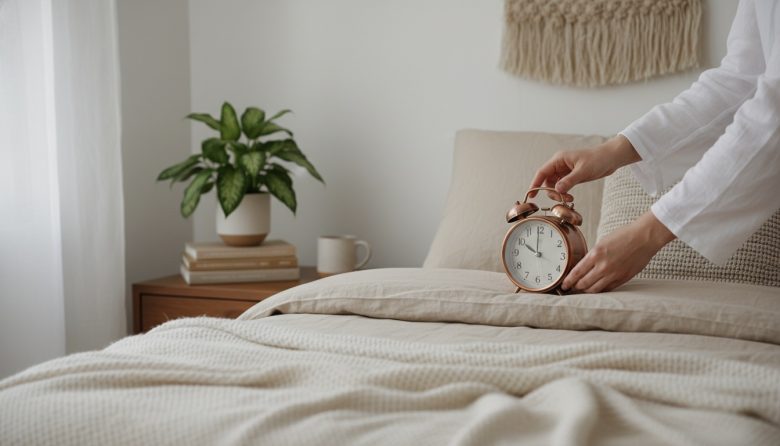
Imagine waking up refreshed every day, tackling your to-do list with energy, and actually enjoying evenings without that wired exhaustion. Sarah did just that. She used to crash at midnight one night and drag through a 3 p.m. bedtime the next. Small tweaks turned her chaos into calm.
Building a consistent sleep schedule isn’t about willpower. It’s about smart cues and routines that stick. You’ll feel sharper focus, steadier moods, and more time for what matters. This guide maps a simple path with real-life steps, so you can start tonight.
A consistent schedule syncs your body’s natural clock, called the circadian rhythm. Studies show it cuts fatigue by up to 30% in just weeks. We’ll cover a quick audit, anchor points, light cues, wind-down habits, and four key pillars. Plus, fixes for blockers and a tiny tracker for small wins.
Sarah’s story proves it works for busy lives. She stacked one cue after dinner and saw her bedtime steady in days. Ready for your turn? Let’s begin with knowing your starting point.
Map Your Natural Rhythm Through a Quick Sleep Audit
Start by spotting your current patterns. Grab a notebook or phone app. For three days, log when you get into bed and when you actually fall asleep, plus wake-up times.
Include what you did before bed, like scrolling or snacking. Note how you feel each morning on a scale of 1-5. Sarah found her average bedtime was 11:30 p.m., but it swung by two hours.
Day one: jot times right away. Day two: add energy notes. Day three: calculate averages. Patterns emerge fast, like late caffeine pushing bedtimes.
This audit takes five minutes daily. It reveals your natural rhythm without guesswork. Use it to pick realistic anchors that fit your life.
For example, if you average 7 a.m. wake-ups, aim for 11 p.m. bedtimes for eight hours. Adjust for your needs. This step builds awareness, the foundation for consistency.
Lock in a Bedtime Anchor That Fits Your Life
From your audit, pick a fixed bedtime and wake time. Choose based on averages, not ideals. Sarah anchored at 11 p.m. bed and 7 a.m. wake.
Habit stack it to something reliable, like brushing teeth signals wind-down. Place your alarm across the room for morning commitment. This creates automatic cues.
Before: Sarah hit bed whenever Netflix ended, varying wildly. After: Post-teeth brush, she dimmed lights at 10:30 p.m. Bedtime stabilized to 15 minutes variance.
Make it flexible for life. If evenings run long twice a week, shift by 30 minutes max. Consistency comes from cues, not perfection.
Test for a week. Tweak if mornings drag. This anchor becomes your routine’s backbone.
Harness Morning Light to Signal Wake-Up to Your Body
Morning light tells your brain it’s time to rise. Open curtains first thing or step outside for five minutes. No coffee yet—light first.
Your body craves this cue. It boosts alertness hormones and sets your clock. Sarah added a porch coffee, feeling energized by noon.
Environment tweak: face east if possible. Cloudy days? Use a 10,000 lux lamp for 20 minutes. Consistency here pulls your whole schedule forward.
Before: groggy slogs to work. After: light walk post-alarm led to even evenings. Stack with your anchor for double impact.
Science backs it—light exposure cuts sleep inertia by half. Start small, build the habit.
Create Frictionless Evening Wind-Down Cues
| Habit | Cue | Track for 7 Days? (Yes/No) | Notes |
|---|---|---|---|
| Dim room lights | After dinner | Yes | Red bulbs reduce blue light; swap one lamp first |
| Herbal tea sip | Post-TV off | Yes | Chamomile calms; keep mug by sink as reminder |
| Journal three gratitudes | Brush teeth | Yes | Shifts mind from stress; notebook on nightstand |
| Legs-up-the-wall pose | Change to PJs | No | 5 mins relaxes; optional for beginners |
| Phone in another room | Last bathroom trip | Yes | Charger in kitchen prevents scrolls |
Use this checklist to build your wind-down. Pick two to start. Cues link habits to daily actions, cutting decision fatigue.
Sarah checked off dim lights and tea after her audit. Evenings smoothed out. Track yes/no daily for wins.
Notes guide tweaks. Like placing tea mug visibly. This table makes routines visual and doable.
Friction drops when cues are automatic. Rotate habits weekly for variety. Your evenings transform gently.
Link it to how to time meals for improved night sleep by eating dinner two hours before bed. This stacks nutrition with cues seamlessly.
Follow the 4 Pillars of Sustainable Sleep Consistency
These pillars hold your schedule steady. Build one per week for lasting change.
- Fixed anchors: Bed and wake times vary by under 30 minutes daily. Sarah’s 11 p.m./7 a.m. stuck after week one, freeing mental energy.
- Sensory cues: Light mornings, dim evenings. Add scents like lavender at wind-down for multi-sense signals.
- Environment design: Cool room at 65°F, blackout curtains. Small tweak: fan on low creates white noise cue.
- Recovery mindset: View slip-ups as data, not failure. Missed anchor? Audit why, adjust cue next day.
Each pillar supports the others. Start with anchors, layer on. Sustainable progress beats quick fixes.
Real example: Tom stacked light with coffee anchor. His weekends aligned naturally. Feel the steady build.
Bust Through Common Blockers with Easy Fixes
Late caffeine spikes linger six hours. Switch to decaf post-2 p.m. Sarah swapped and slept deeper.
Screens blue-light your brain awake. Night mode or glasses 90 minutes before bed. Pair with phone-away cue.
Weekend chaos? Cap shifts at one hour. Use audit to plan. For shifts, explore a flexible sleep plan for shift workers everywhere.
Irregular socials? Wind-down portable—tea in a tumbler. These fixes keep momentum.
Track One Tiny Metric for Steady Wins
Log bedtime variance daily. Aim under 30 minutes. Use a notes app or bedside chart.
Seeing numbers drop motivates. Celebrate weeks under target. Small wins compound.
FAQ
What if my schedule changes with shift work?
Adapt anchors per shift, max two hours swing. Prioritize wind-down cues anywhere. A flexible sleep plan for shift workers everywhere offers tailored tweaks, like nap banking.
Use morning light post-shift to reset fast. Track variance still. Consistency flexes without breaking.
How do I handle weekends without derailing?
Allow 30-60 minute shifts max. Keep cues identical—light walk, dim dinner. Saturday audit keeps patterns visible.
Sarah slept in one hour, but anchors pulled her back Monday. Weekends enhance, not erase, routines.
Is it okay to nap during the day?
Yes, under 20 minutes before 2 p.m. It recharges without night interference. Set alarm, dark spot.
Skip if evenings drag. Naps support anchors during transition weeks.
What if screens are unavoidable at night?
Blue-blockers or f.lux app minimum one hour pre-bed. Stack with journal cue post-screen. Distance eyes 20-20-20 rule.
For work, end 90 minutes early if possible. Cues override blue light over time.
How long until I feel the benefits?
Sharper mornings in 3-5 days. Full rhythm sync by two weeks. Steady tracking shows progress.
Hot nights? Try a summer night cooling routine for easy sleep to boost comfort fast. Patience yields calm energy.
Ready? Choose one habit from the checklist and pair it with a cue like “brush teeth = dim lights.” Commit for 7 days and watch the magic.