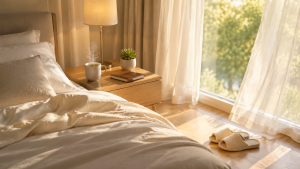
Picture this: your alarm blares at 6:30 a.m., but you slap snooze five times. You drag yourself out of bed, groggy and grumpy, chugging coffee just to feel human by noon. Sound familiar? That daily battle steals your energy and sets a frantic tone for the day.
Now imagine waking up gently as sunlight filters in, your body ready without a jolt. Steady energy flows through your morning, and small joys like birdsong feel real. This isn't a dream—it's what happens when you shift to natural wake-ups.
I've been there, hitting snooze like it was my job. But simple tweaks aligned my rhythm with dawn's light. You'll get steady alertness, less afternoon crashes, and a calmer start. No harsh alarms needed.
Today, we'll build this with four easy pillars, a handy checklist, blocker fixes, and one tiny trackable win. These routines stack onto your life without overhaul. Ready for sunrise glow? Let's ease in.
Why Your Body Craves a Buzzer-Free Dawn
Your body runs on a natural clock called the circadian rhythm. Cortisol, your gentle wake-up hormone, peaks around dawn to boost alertness. Harsh alarms spike stress instead, leaving you foggy.
Light exposure tells your brain it's morning. Natural dawn light suppresses melatonin smoothly, unlike blue-light buzzers that confuse signals. Studies show this leads to better mood and focus all day.
Take my friend Mike. Before, his 7 a.m. alarm meant three snoozes and shaky hands by lunch. After prioritizing light cues, he wakes refreshed, skips the crash. Your body thanks you with sustained energy.
This science points to habit shifts over force. Next, we'll layer four pillars for that buzzer-free flow. It builds consistency gently.
Four Pillars to Sync with Your Natural Clock
Pillar 1: Evening dim-down cue. Start winding down lights two hours before bed. This cues melatonin rise, prepping deep sleep for easy mornings.
Stack it simply: pair dinner cleanup with lamp swaps. No bright screens—use night mode if needed. If you're tackling top 5 habits secretly ruining your sleep, this cuts blue light first.
Pillar 2: Consistent bedtime anchor. Pick a sleep window, like 10 p.m. to 6 a.m., and stick close daily. Even 15-minute drifts build rhythm over weeks.
Anchor with a cue: brush teeth, then bed. Track it loosely at first. This steadies your internal clock without rigidity.
Pillar 3: Dawn light ritual. Let morning light hit your face first thing. Open curtains or step outside—no coffee yet.
Habit stack: right after eyes open, pull blinds. Five minutes resets your rhythm. It feels like a soft nudge from nature.
Pillar 4: Gentle body nudge. Sip room-temp water and stretch lightly. This hydrates and wakes muscles without rush.
Pair with light ritual: window open, deep breaths. These pillars create cues with low friction. Use the checklist next to pick starters.
| Habit | Morning Cue | Estimated Time | Tiny Metric to Track |
|---|---|---|---|
| Open curtains | First light on face | 2 min | Did eyes open before alarm? (Yes/No) |
| Sip water | Glass by bed | 1 min | Hydrated before coffee? (Yes/No) |
| Deep breaths outside | Doorstep after curtains | 3 min | Felt calmer? (1-3 scale) |
| Light stretch | Bedside mat ready | 4 min | Moved without groan? (Yes/No) |
| Gratitude note | Journal by window | 2 min | Mood lift noted? (Yes/No) |
| Sunrise glance | Phone off till after | 5 min | Energy steady by 9 a.m.? (Yes/No) |
This table maps habits to cues for easy starts. Pick based on your space. It reduces decision fatigue with clear times.
Spot and Sidestep Common Wake-Up Blockers
Blocker 1: Late-night screens. Blue light delays melatonin by hours. Fix: set a 9 p.m. dim cue, like phone to grayscale.
Environment tweak: charge devices outside bedroom. This cuts friction instantly.
Blocker 2: Weekend sleep-ins. They shift your clock, making Monday brutal. Fix: cap lie-ins at one hour later, same wake cue.
- Use light ritual both days.
- Stack a weekend walk.
Blocker 3: Stress carryover. Racing thoughts push bedtimes late. Fix: five-minute evening dump—note worries, then dim.
Blocker 4: Dark winters. Less dawn light stalls rhythm. Fix: use a timer lamp for gradual glow, mimicking sunrise.
For seasonal tweaks, blend with a holiday season sleep routine to stay energized. These fixes keep progress steady. Now, track wins simply.
Track One Tiny Metric for Small Wins
Choose wake-up time plus mood on a 1-5 scale. Log it daily in a notebook or app note. Takes 10 seconds.
Consistency builds over perfection—miss a day, just resume. Watch patterns emerge, like better scores after dim evenings.
This tiny metric celebrates small wins. It cues motivation without overwhelm. Pair with the checklist for momentum.
Sarah's Story: From Snooze Hell to Sunrise Glow
Sarah, a teacher, dreaded mornings. Her alarm war left her exhausted by 2 p.m., relying on sugar highs. Weekends? Total reset, worse Mondays.
She started small: evening dim-down at 9 p.m., curtains at dawn. Added water sip from the checklist. Bedtime anchored at 10:30 p.m.
After seven days, snoozes dropped to one. Mood logs hit 4/5 steadily. Now, she greets sunrise with energy, preps lessons joyfully.
Her routine: light ritual, stretch, note one gratitude. No perfection, just cues. You can mirror this glow—start tonight.
Pick one habit and one cue from the checklist. Try for seven days. Notice the steady shift, then layer more.
Frequently Asked Questions
Can I still wake up naturally with a 6 AM job?
Yes, consistency trumps early hours. Anchor bedtime earlier, like 10 p.m., for seven hours. Use dawn light even in dim seasons—timer lamps help. Track mood to adjust gently; most see rhythm stabilize in two weeks.
What if weekends mess up my rhythm?
Weekends tempt shifts, but cap wake-ups one hour later. Keep light ritual and water cue. This preserves your clock without strictness. Log metrics both days to spot patterns and tweak.
Is this safe for night owls?
Night owls adapt gradually. Shift bedtime 15 minutes earlier weekly till aligned. Focus on light cues over force. If genes play in, aim for your best window—consult doc for extremes.
How do I handle travel disruptions?
Travel jolts clocks, so pack cues: eye mask for evenings, morning light hunt. Reset with local dawn ritual day one. Use app for jet-lag tracking. Back home, resume pillars fast.
What’s the first small change to try?
Start with evening dim-down—lamps low two hours pre-bed. Stack a daily habit routine to fall asleep in minutes. Log wake mood for proof. Builds wins quickly.